
273a Church St, Onehunga, Auckland, Auckland
By Christopher Green, UP2IT Access Hire · 7 August 2026 · 6 min read
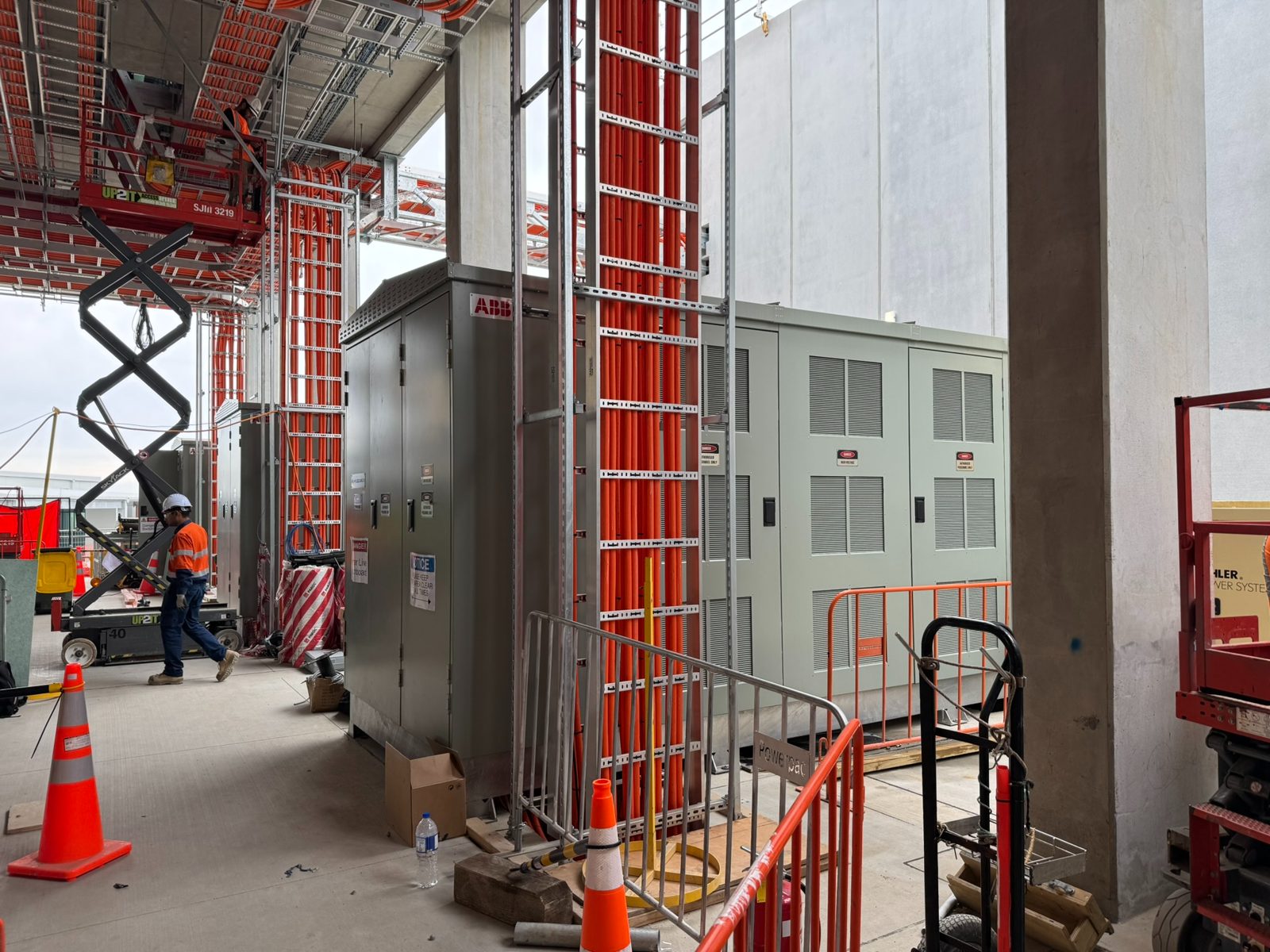
Electric slab scissor lifts are one of the safest ways to work at height indoors. But that only holds when three things are right: a trained operator, a suitable floor, and a clear space overhead. Here’s what you need to know before you go up.
The short version
- Get trained and familiarised on the exact model you’re using.
- Do a pre-start check every shift. If anything fails, don’t use it.
- Only lift on firm, level floors. Slab scissors tolerate almost no slope when raised.
- Look up before you lift. Overhead crushing is the biggest indoor risk.
- Have a rescue plan and someone on the ground who can lower you.
WorkSafe NZ lists five main ways people get hurt on mobile elevating work platforms (MEWPs). Each one is preventable.
| Hazard | How to prevent it |
|---|---|
| Entrapment | Check overhead clearance, raise slowly near structures, use anti-crush guarding. |
| Overturning | Stay on firm, level floors within the slope limit. Watch for holes and edges. |
| Falls from the platform | Gate closed, feet on the floor, never climb or lean over the rails. |
| Collisions and power lines | Plan your route, use barriers and keep 4 m from overhead lines. |
| Dropped objects | Tether tools, use a tray and keep people out from underneath. |
This isn’t theoretical. In January 2025, WorkSafe urged businesses to review how they use scissor lifts after a worker died following a fall in Auckland (WorkSafe NZ).
Under the Health and Safety at Work Act 2015, the business running the job, the operator and the hire company all have duties. And whatever this guide says, the manufacturer’s manual for your machine comes first.
Run through this before you start each day. It takes five minutes.
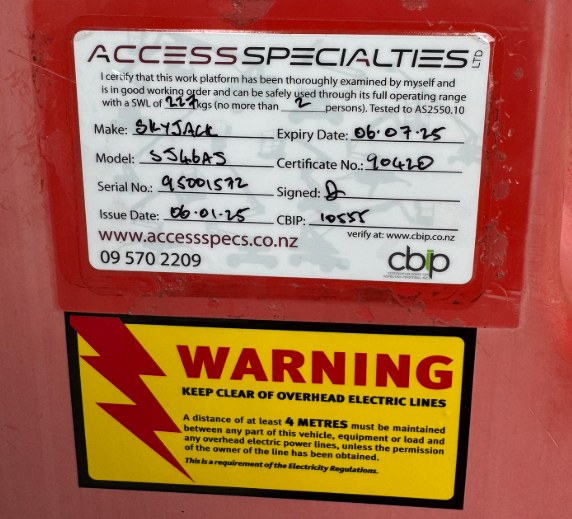
Something not right?
Tag the machine out of service and call your hire company. Don’t use it.
Slab scissors are built for firm, flat, smooth surfaces like concrete floors. Most overturns start at ground level, with a wheel dropping into a hole or the machine sitting on a slope.
Being crushed between the guardrail and something overhead is the most serious risk on an indoor scissor lift. WorkSafe describes operators being trapped against a structure, or pinned against the controls, and unable to stop the machine (WorkSafe NZ).
Add anti-crush protection
Secondary guarding such as EQSS OverWatch helps stop operators being crushed or tangled against overhead structures. Watch how it works. Available on any UP2IT scissor lift on request.
Slab scissors are mostly used indoors, but if you take one outside or under an awning, treat every overhead line as live.
The 4 metre rule
Under NZECP 34, every part of the machine must stay at least 4.0 m from a live overhead line, unless the line owner has given written consent (NZECP 34 extract).
Between 4 and 6.4 m, WorkSafe advises a dedicated safety observer. In Auckland, close approach consents come from Vector.
Stay inside the guardrails with both feet on the platform floor. WorkSafe is clear: no reaching or climbing over the rails.
| ✓ Do | ✗ Don’t |
|---|---|
| Count people, tools and materials against the SWL | Exceed the safe working load |
| Close the gate or chain every time you get on | Use ladders, buckets or planks for extra height |
| Keep heavy items low and central | Climb, sit or stand on the guardrails |
| Tether tools and barrier off the area below | Push or drill hard beyond the manual force rating |
| Drive elevated only on firm, level floors, slowly | Attach signs or sheets that catch the wind |
| Lower fully whenever you leave the machine | Park or walk away with the platform raised |
Agree a rescue plan before anyone goes up. WorkSafe says it should cover a stranded operator, illness, injury and chemical exposure (WorkSafe NZ).
Never work alone
Someone on the ground must be able to see you, hear you and reach the ground controls quickly.
Print this out or keep it on your phone.
☐ Trained and familiarised on this model
☐ Pre-start check done, certificate current
☐ Floor firm, level, clean and able to take the load
☐ Holes, pits, edges and ramps identified
☐ Overhead path checked for beams, services, cables and power lines
☐ Area below barriered off
☐ SWL and wind rating confirmed
☐ Gate closed, feet on the floor, no one climbing the rails
☐ Ground person briefed on ground controls and emergency lowering
☐ Rescue plan agreed
Need a scissor lift or EWP training?
UP2IT Access Hire supplies serviced, certified electric slab scissor lifts across Auckland from our Penrose depot. We run EWP operator training on your site or in our modern classrooms. And if a machine can’t be fixed on site within half a day, we’ll swap it where possible.
This guide is general information only. Always follow the manufacturer’s operating manual, your site safety plan and current WorkSafe NZ guidance.